Need sewer line repair in Annapolis?
Tell us what is going on and request an estimate. A provider in our network can follow up with next steps. Prefer to talk? Request a callback to check provider availability.
No obligation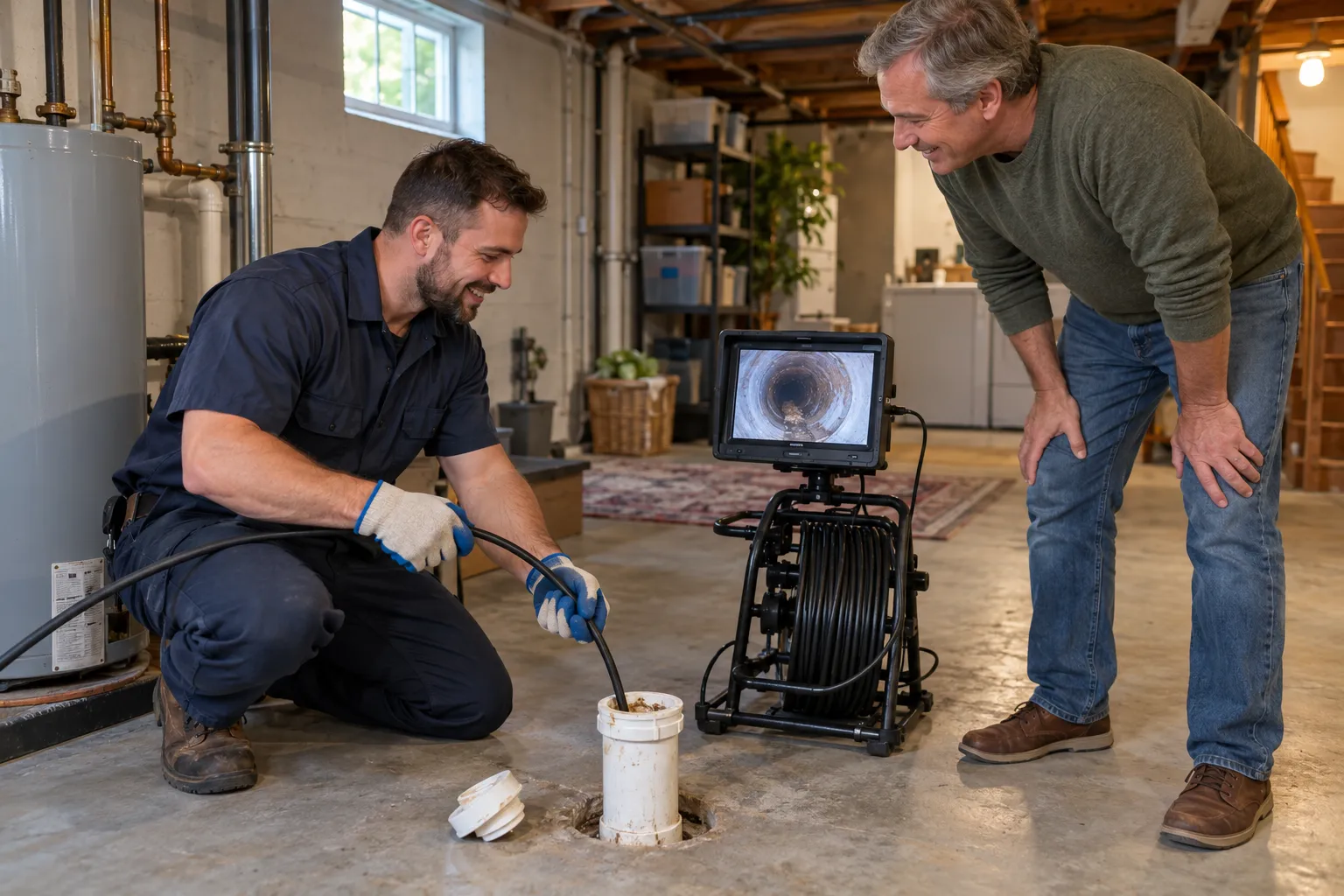
Request an estimate today
Is something wrong with the pipe that carries waste out of your home? Maybe a basement drain is gurgling, or sewage is coming up in the shower. These are signs of a sewer line problem, and the first hours matter most. Small steps first, then a pro.
Clubsapart Plumbing is a referral service. We do not do the repair work. We connect homeowners in Annapolis and the Annapolis area with independent providers in our network who handle sewer line repair, from camera inspections to full pipe replacement. This page explains what to expect, how the days unfold, and what to ask before work begins. You can request an estimate with no obligation.
Take a breath. This is messy and stressful, but you can handle the first steps. Start with the clock. A backup is easiest to limit in the first few minutes.
Stop using every drain and toilet. Do not flush, run the dishwasher, or start a load of laundry. Each bit of water you send down has nowhere to go but up.
Breathe, then shut off. If the water is rising near a basement outlet, turn off the main water supply. That keeps new water from adding to the mess.
Next, stay out of standing water near electrical outlets, panels or appliances. If you can safely reach the breaker, a provider may ask you to switch off power to the wet area. If you cannot reach it safely, leave it alone.
Sewage carries germs. Wear rubber gloves and boots if you must enter. Children, older adults, and anyone with a weak immune system should stay away. Do not mix cleaning chemicals, and do not try to scoop and scrub everything yourself yet.
Water and waste keep looking for the easiest way out of the house. In many colonial and split-level homes, that is the basement floor drain or a shower stall. Soaked drywall, carpet and stored boxes start to absorb moisture.
This is a good time to reach a provider. Many providers can respond quickly, though availability varies. Request a callback to check provider availability, or use the form.
Not every problem starts with a flood. Often it whispers first. Watch for these:
One slow sink is usually local. Many symptoms together point to the main line.
Older neighborhoods often have cast iron, clay or galvanized pipe that has simply worn out. Rust flakes inside the pipe and catch debris. Tree roots find tiny joints and push in, looking for water.
Winters add stress too. When the ground shifts through repeated frost and thaw, pipes can crack or separate. Humid summers feed root growth. Heavy storms can overload a line that is already narrowed.
Moisture settles into walls and floors. Odors deepen. Mold can begin to show up on damp materials within a couple of days. Items that were only wet at first may now need to be thrown out.
A cracked pipe underground can also keep leaking into the soil, which can wash away support. That is why waiting to see if it clears up is a risky plan.
Most start with a camera inspection. A small camera on a flexible cable goes into the line through a cleanout. The provider can see cracks, roots, sags and breaks, and measure how far down the trouble sits.
Sometimes a locator tool marks the spot above ground, so the dig is smaller. Ask to see the video. It helps you understand the repair and gives you something to keep.
A small crack becomes a bigger one. Soil gets into the pipe and builds clogs. Backups return more often, and each one adds cleanup work. A repair that could have been a short section can turn into a longer replacement.
The right fix depends on what the camera shows.
Providers in our network can explain which options fit your yard, your pipe material and your budget.
Often yes to the permit. Many towns require one for sewer work, and the provider usually handles the paperwork. Ask who pulls it.
Ownership varies. In many places, you own the pipe from the house to the street connection, and the town owns the main. Your local public works office can confirm the line.
Some policies may cover sudden damage. Wear and tear or root damage is often treated differently, so check your policy. Providers can often help document damage for a claim.
You do not need to solve it all at once. Make the area safe, take your photos, and ask for help. Small steps first.
A small camera shows the pipe from inside, so the problem is found before digging starts.
A short broken section can be cut out and replaced without redoing the whole line.
Lining or pipe bursting can fix many lines with far less digging in your yard.
When pipe is badly worn or collapsed, a provider can replace the line from house to connection.
Sewer work varies a lot by pipe depth, length, material and how much digging is needed. These are typical U.S. ranges only. Ask for a written quote after the provider has looked inside the line.
| Service | Typical range | Notes |
|---|---|---|
| Camera inspection | $100 – $500 | Often done before any repair |
| Cleanout installation | $1,000 – $4,000 | Gives easier access to the line |
| Spot repair | $1,500 – $5,000 | Depends on depth and access |
| Trenchless lining | $3,000 – $10,000 | Less digging, price rises with length |
| Pipe bursting | $4,000 – $12,000 | Replaces pipe with a smaller dig |
| Full open-trench replacement | $3,000 – $25,000 | Wide range from yard, depth and surface repair |
Hold off on toilets, sinks, laundry and showers, and shut off the main water if sewage is rising.
Stay away from standing water, electrical items and sewage contact, and take a few photos.
Tell us what you see, and a local provider can follow up.
Look at the camera video, repair method, permit plan and written price.
Independent providers see old cast iron, clay and rowhouse lines often in this region.
Tell us about the problem once, and we help connect you with a provider in our network.
We explain what is happening and what to ask, so you can compare quotes calmly.
Requesting an estimate does not commit you to hiring anyone, so you can decide at your pace.
Tell us what is going on and request an estimate. A provider in our network can follow up with next steps. Prefer to talk? Request a callback to check provider availability.
No obligationLook for several slow drains at once, gurgling toilets, sewage smells, backups in a basement drain, or soggy patches in the yard. A camera inspection by a local provider can confirm what is wrong inside the pipe.
Often, yes. Trenchless methods like pipe lining or pipe bursting need only small access holes. They do not suit every pipe, so a camera inspection helps a provider tell you which method fits your line.
Some policies may cover sudden damage, but wear, age and root damage are often treated differently. Check your policy and ask your agent. Providers can often help document damage for a claim.
Tell us what is going on and request an estimate. A provider in our network can follow up with next steps. Prefer to talk? Request a callback to check provider availability.
No obligation